Why Does Back Pain Increase With Age?
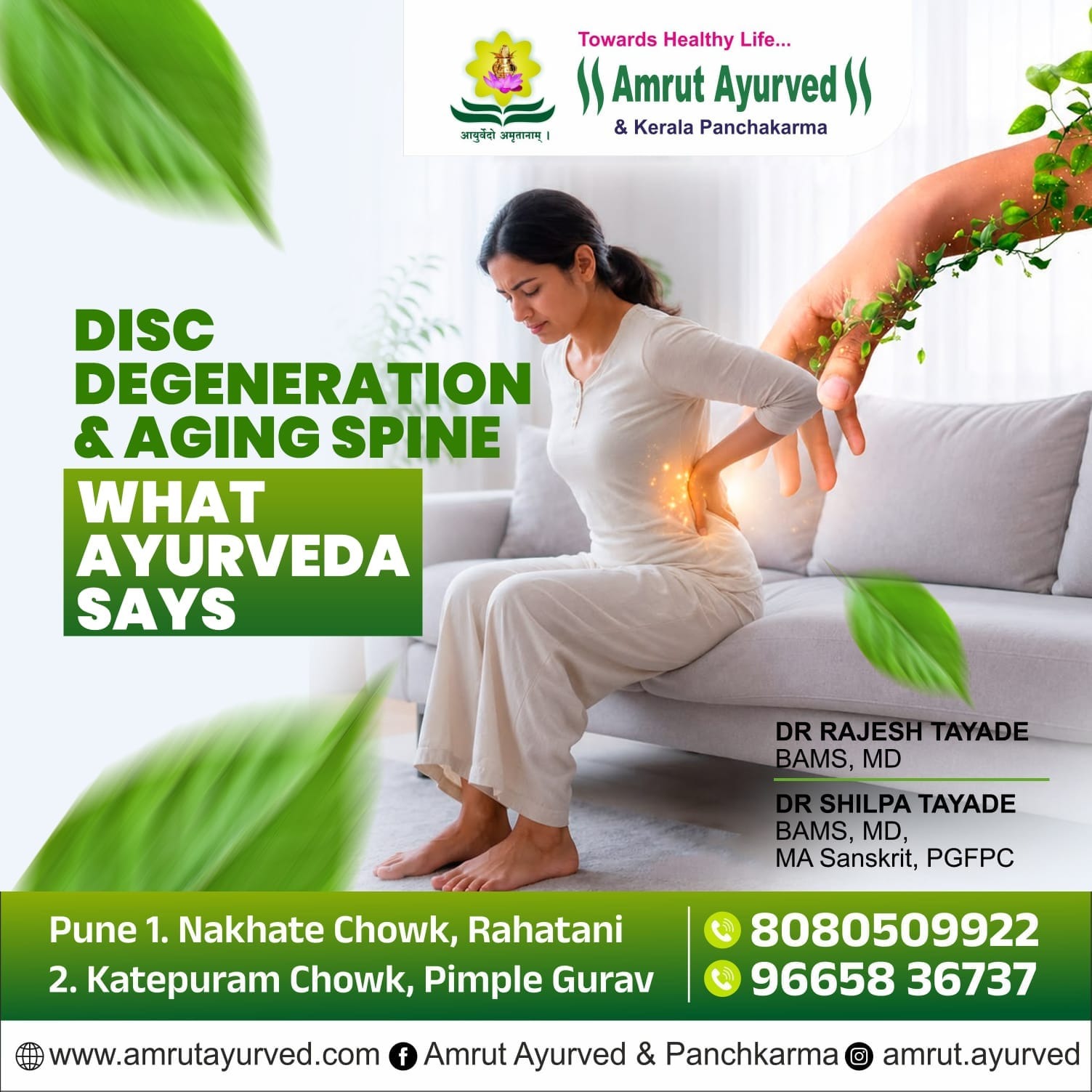
As we age, spinal discs can undergo progressive structural changes. However, disc degeneration on an MRI does not always mean severe pain, and the severity of symptoms varies from person to person. Muscle weakness, poor posture, sedentary habits, previous injuries, excess physical strain, and age-related changes can all influence spinal function.
Ayurveda emphasizes maintaining Vata balance, healthy movement, adequate nourishment, proper daily routines, and musculoskeletal strength as part of long-term spine care.
How Does Panchakarma Fit Into Spine Care?
Panchakarma and supportive Ayurvedic therapies may be considered as part of an individualized management plan for chronic musculoskeletal complaints. Therapies such as Basti, Abhyanga, Pottalli, Kati Basti, Lepa and selected Panchakarma procedures are traditionally used to support relaxation, mobility, and symptom management.
Treatment should be selected according to the patient's clinical condition—not simply because an MRI shows “disc degeneration.“
Why Choose Amrut Ayurved and Kerala Panchakarma?
Amrut Ayurved and Kerala Panchakarma provides personalized Ayurvedic care for low back pain, cervical spondylosis, lumbar spondylosis, disc-related pain, and age-associated spinal stiffness in the Pune and Pimpri-Chinchwad region.
The focus is on understanding the patient as a whole and developing a practical treatment plan that may include Ayurvedic therapies, Panchakarma, medicines, exercise, yoga, posture correction, and lifestyle guidance.
Looking for Ayurvedic spine care in Pune? Consult Amrut Ayurved and Kerala Panchakarma for an individualized assessment of your spinal health.