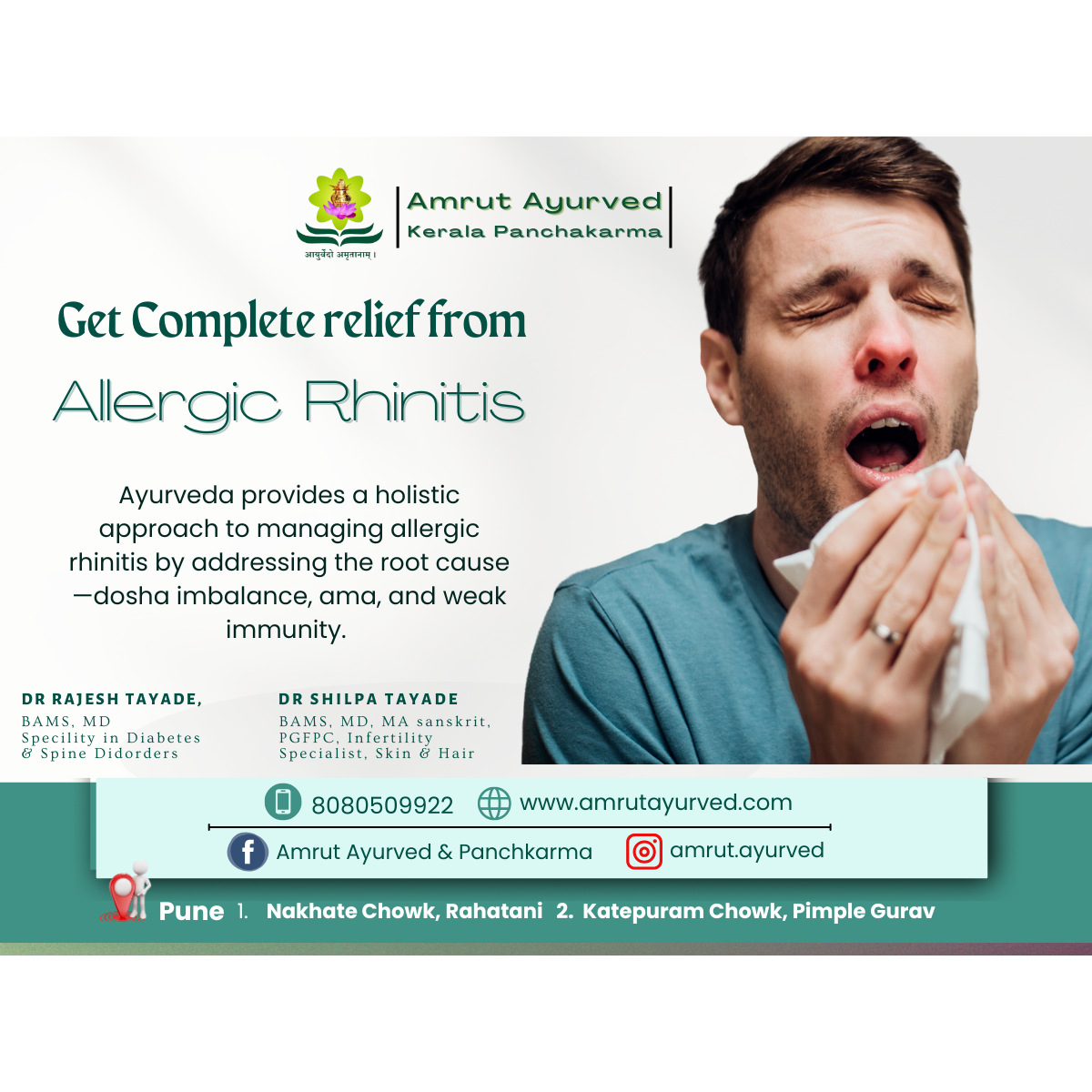
Best Ayurvedic Approach to Allergic Rhinitis in PCMC
Allergic rhinitis is a condition characterized by sneezing, nasal congestion, runny nose, and itchy eyes caused by allergens such as pollen, dust, or animal dander. From an Ayurvedic perspective, allergic rhinitis is understood as an imbalance in the body\'s doshas, primarily Kapha and Vata, along with a weakened immune system (ojas kshaya).
Ayurvedic Understanding
Dosha Imbalance:
Kapha Dosha: Excessive Kapha leads to increased mucus production, congestion, and a feeling of heaviness.
Vata Dosha: Aggravated Vata causes dryness, irritation, and sneezing.
When both Kapha and Vata are disturbed, they block the channels (srotas), causing the typical symptoms of allergic rhinitis.
Ama (Toxins):
Undigested food or metabolic toxins (ama) can accumulate in the body, further disturbing the doshas and weakening immunity.Roga Nidana (Etiology):
Exposure to allergens (prakriti vighata).
Poor digestion (agnimandya) and improper dietary habits.
Seasonal changes (ritucharya avamana).
Stress and lack of sleep.
Ayurvedic Management of Allergic Rhinitis
Panchakarma Therapy:
Vamana (Therapeutic Emesis): To eliminate excess Kapha from the body.
Nasya (Nasal Therapy): Administration of medicated oils (e.g., Anu Taila) helps clear nasal passages and balance doshas.
Virechana (Purgation): Detoxifies the body and balances aggravated Pitta, often a secondary contributor.
Herbal Remedies:
Turmeric (Haridra): Reduces inflammation and boosts immunity.
Tulsi (Holy Basil): Acts as a natural antihistamine and expectorant.
Guduchi (Tinospora cordifolia): Strengthens immunity and reduces hypersensitivity to allergens.
Pippali (Long Pepper): Helps in clearing nasal congestion and relieving respiratory discomfort.
Rasayana (Rejuvenation Therapy):
Chyawanprash and herbal tonics to strengthen immunity and rejuvenate the respiratory system.
Dietary Modifications:
Avoid dairy products, cold or heavy foods, and processed items that increase Kapha.
Incorporate warm, light, and easily digestible meals, including soups and herbal teas.
Use spices like ginger, black pepper, and cinnamon to enhance digestion.
Lifestyle Recommendations:
Practice yoga and pranayama (e.g., Anulom Vilom, Bhastrika) to strengthen respiratory health.
Maintain a regular sleep schedule and reduce stress through meditation.
Avoid exposure to allergens and follow a proper seasonal regimen (ritucharya).
Preventive Measures
Strengthen digestive fire (agni) to prevent ama formation.
Use herbal nasal drops (e.g., Anu Taila) daily to cleanse and protect nasal passages.
Consume warm water infused with turmeric or ginger to alleviate symptoms and prevent recurrences.
Conclusion
Ayurveda provides a holistic approach to managing allergic rhinitis by addressing the root cause—dosha imbalance, ama, and weak immunity. Through detoxification, herbal medicines, and lifestyle modifications, it not only alleviates symptoms but also strengthens the body to resist future allergen attacks, ensuring long-term wellness.
Visit Amrut Ayurved & Kerala Panchakarma Clinic in PCMC / Pune to understand more about the health benefits of Nasya treatment under Dr. Rajesh Tayade\'s expertise. Get your equilibrium back and set off on a path to complete wellbeing.
For more details, consult Dr. Rajesh Tayade at Amrut Ayurved & Kerala Panchakarma Clinic: 📞 +91 808509922 / 9665836737
🌐 www.amrutayurved.com
Subscribe Our YouTube Channel: https://studio.youtube.com/channel/UCrtt5ogMNkAWV-sKtOaUbGg
Like Our Page: https://www.facebook.com/amrutayurveda
Follow Us on : https://twitter.com/AmrutAyurved